
Mapanare Snakebite Envenoming (Bothrops): A Case That Highlights the Importance of Correct Antivenom Dosing and Clinical Follow-Up

We recently learned about the case of Mr. Carlos Rodríguez, 65 years old, who was bitten by a snake of the genus Bothrops (mapanare) and is currently hospitalized at the Jesús María Casal Ramos Hospital in Araure, Portuguesa state.
According to his relatives, the accident occurred while Mr. Carlos was assisting a person who had suffered an incident on the road, between the towns of Gavilán and La Atenea, near the Simón Bolívar housing complex. To help the injured person, he left his bicycle by the side of the road, and when he returned to pick it up again, he felt the bite. He did not see the snake.
When we were informed about the case, the patient had already been experiencing several days of clinical progression, with severe local complications and a difficult economic situation for his family, who have been covering a significant portion of the medications and materials necessary for his treatment on their own.
Since the Vivarium Foundation, we have begun to provide support and technical guidance to families to assist in the medical process and help disseminate the case for educational and solidarity purposes.

The Evolution of Mapanare Snakebite
According to the information received, the patient was bitten by a mapanare approximately nine days ago.
The snakes of the genus Bothrops possess venom with the following actions:
hemotoxic
proteolytic
intense inflammatory
destructive to soft tissues
When the envenomation is severe, the venom can cause rapid destruction of the skin, muscles, and blood vessels in the affected area.
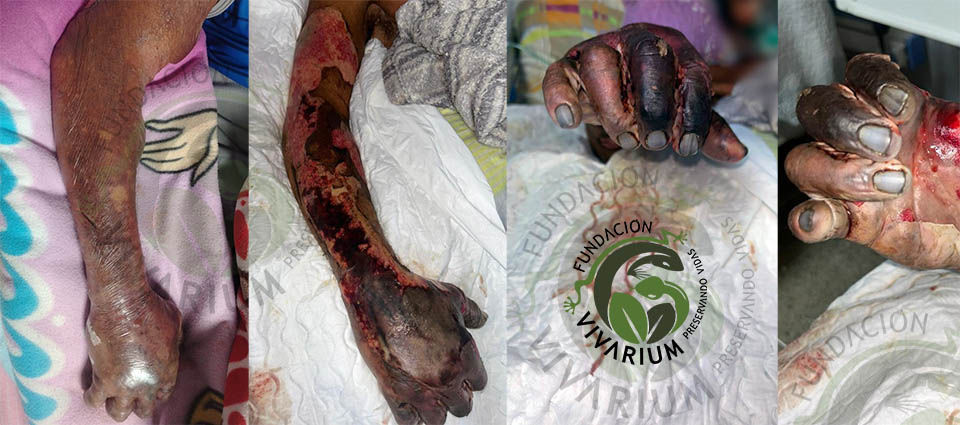
The clinical images of the case show an extensive lesion in the upper extremity, characterized by:
massive edema of the hand and forearm
extensive skin necrosis
diffuse ecchymosis
epidermal detachment
areas of exposed bloody tissue
signs of ischemia in the fingers
This type of lesion is consistent with a severe botropic poisoning with progressive tissue involvement, one of the most feared complications of snakebite accidents.
What Medical Studies Show
Among the studies conducted is a venous and arterial Doppler ultrasound of the affected arm, which reports:
normal arterial flow
venous system without thrombosis
absence of major vascular obstructions
This finding is important because it indicates that the observed inflammation and edema are not due to a primary vascular problem, but rather to the inflammatory and destructive process caused by the venom.
The hematological analyses also reflect a significant inflammatory picture:
elevated leukocytes (23.7)
marked neutrophilia
moderate anemia
decreased platelets
These findings can be observed in cases of severe viperine envenomation with systemic inflammation and risk of infectious or hemorrhagic complications.

A Critical Point in the Management of Snakebite
One of the most important aspects in the treatment of a mapanare snakebite is the appropriate administration of antivenom.
Clinical protocols establish that the initial dose should be based on the severity classification of the poisoning, not on the patient's late evolution.
In general terms, the scheme used in Venezuela with polyvalent antivenom (Biotecfar) establishes:
Mild: 1 kit (5 vials)
Moderate: 2 kits (10 vials)
Severe: 3 kits or 4 kits when there are conditions that exacerbate the poisoning (15–20 vials)
In severe cases, the recommendation is to administer the full dose from the outset, properly diluted and under medical supervision.
Insufficient fractionation of the initial dose may allow the venom to continue acting in the body for a longer period, which favors the progression of necrosis and other complications.
Another key point in these cases is the clinical reclassification of the patient during the first hours and days of evolution, to adjust treatment if the poisoning progresses.
The Current Stage of Treatment
The patient currently requires continuous medical care, including:
daily wound dressings
debridement procedures to remove necrotic tissue
antibiotics and supportive medications
close monitoring of wound progression
This type of management may extend for weeks and represents a significant challenge for families, especially when they need to cover part of the necessary supplies.
A Call for Solidarity
The family of Mr. Carlos Rodríguez has requested support to continue covering the expenses associated with daily treatment.
The dressings, medical supplies, and medications needed to manage an extensive necrotizing injury can represent a significant cost.
From the Vivarium Foundation, we accompany the family in promoting the case and providing the necessary medical guidance throughout the process.
Those who wish to support or learn more details can do so through the foundation's official channels. 👉 DONATE
What This Case Reminds Us
Snakebite accidents remain a frequent reality in many regions of the country.
Prevention, timely access to antivenom, and appropriate clinical management are determining factors in avoiding serious complications.
Each case also reminds us of the importance of:
quickly recognizing signs of poisoning
seeking immediate medical attention
applying appropriate treatment protocols
strengthening ongoing medical education on snakebite accidents
Because behind every accident, there is a person, a family, and a community facing the consequences of this public health issue.
Participate and Share
Leave us your comment! You can also read the thread on our account at X.com/FVivarium with the hashtag: #CasosVivarium
❤️ If you value our educational work and want to help us continue preventing deaths from snake bites in Venezuela, consider making a donation.
Your contribution makes a difference.👉 DONATE
Did you find this information useful?
Help us reach more people: Share this article on your social networks or copy the link and pass it on to someone who might benefit. Prevention is meant to be shared!
⭐️⭐️⭐️⭐️⭐️Leave us a review on Google!


Comments