
Snakes and hantavirus: the silent role of natural predators


When a Disease Turns Its Attention Back to Rodents
The recent fatal cases associated with hantavirus in Argentina have once again sparked public interest in this disease and its transmission mechanisms. Amid the news and debates on social media, many people have started to ask an unusual question:
Is there any relationship between snakes and hantavirus?
Although it may seem like a strange association at first glance, the question has an interesting ecological basis. Snakes do not transmit hantavirus nor do they pose a risk related to this disease. However, they play an important role within the ecosystems where rodents, which act as natural reservoirs of the virus, reside.
Understanding this relationship helps to comprehend something much larger: the connection between biodiversity, ecological balance, and public health.

What is hantavirus and how is it transmitted?
The hantavirus is a group of viruses primarily transmitted by certain wild rodents. In America, some variants can cause what is known as Hantavirus Pulmonary Syndrome (HPS), a severe illness that affects the lungs and can progress rapidly. Transmission occurs mainly when people inhale microscopic particles coming from:
urine
saliva
dried feces of infected rodents
These particles can remain suspended in the air when cleaning warehouses, storage facilities, abandoned homes, or closed spaces where there has been rodent activity.
In South America, wild species such as certain field mice (belonging to the Sigmodontinae group) are the main natural reservoirs of the virus. This explains why the risk is often more associated with rural, agricultural, or wild environments than with traditional urban contexts.
Why Don't All Mice Transmit Hantavirus?
One of the most interesting aspects of hantavirus is that each viral variant is usually associated with specific species of rodents with which it has coevolved over thousands or millions of years.
Therefore, not all mice or rats represent the same epidemiological risk.
The most common urban rodents, (belonging to the Murinae group) such as the Norway rat or the house mouse, belong to different biological groups than many of the wild reservoirs associated with Hantavirus Pulmonary Syndrome in America.
There are some exceptions, such as the Seoul virus —associated with urban rats— but its epidemiological and clinical behavior is different from that of American variants like the Andes virus.
This ecological specificity demonstrates that zoonotic diseases do not depend solely on the "animal," but also on complex evolutionary relationships between species, environments, and microorganisms.

Snakes and Hantavirus: A Little-Known Ecological Relationship
Snakes do not contract hantavirus nor act as transmitters of this disease. However, they do participate indirectly in the ecological balance related to rodents.
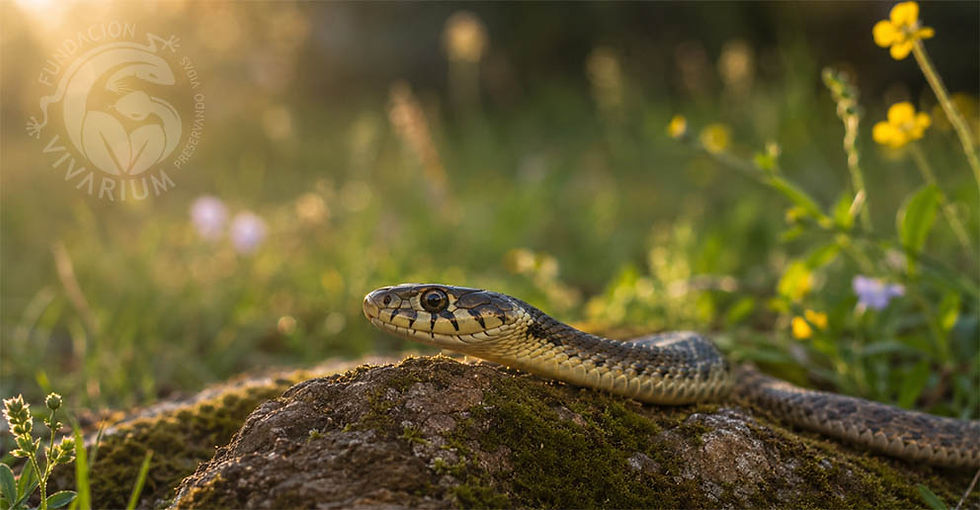
Many species of snakes feed specifically on mice and other small mammals. In rural and natural environments, this makes them important predators within ecological chains. From an ecological perspective, they could be considered a type of “natural biological filter”, not because they directly eliminate diseases, but because they help regulate rodent populations that are involved in the transmission of various pathogens.
When a snake consumes an infected rodent, the microorganisms present are destroyed during the digestive process, and the snake does not become a transmitter of hantavirus. This phenomenon also occurs with many other wild predators. Therefore, while it would be incorrect to claim that snakes “stop” diseases on their own, they are part of ecological networks that contribute to natural balance and, indirectly, can positively influence dynamics related to public health and pest control associated with diseases such as hantavirus, leptospirosis, salmonellosis, and even some hemorrhagic fevers linked to wild rodents in Latin America.
Their role is not to “eliminate” diseases, but to help regulate populations of animals that can act as reservoirs for different pathogens.
From an ecological standpoint, natural predators contribute to maintaining a balance between species. When that balance is disrupted—due to habitat loss, pollution, or indiscriminate removal of fauna—population changes can occur that affect the transmission dynamics of certain diseases.
This does not mean that snakes “directly prevent” hantavirus, but they are part of functional ecosystems where rodent populations remain naturally regulated.
The Human-Snake Conflict and Its Invisible Consequences
In many countries in Latin America, snakes continue to be hunted and eliminated out of fear, misinformation, or deeply rooted cultural beliefs.
However, reducing the biodiversity of an ecosystem can lead to less visible long-term consequences.
The disappearance of natural predators alters the ecological relationships between species and can create imbalances that ultimately affect even human health.
This phenomenon does not occur solely with snakes. It also involves raptors, foxes, small carnivores, and other organisms that participate in the natural control of rodents and pests.
As we explored earlier in our article on the human-snake conflict in Venezuela, fear often leads to impulsive decisions that end up weakening the ecological balance we also depend on.
Public health and ecological balance go hand in hand.
For decades, public health and environmental conservation were viewed as separate issues. Today we know they are deeply connected.
The emergence of zoonotic diseases, the increase in contact between humans and wildlife, and the environmental changes caused by human activities have demonstrated that the state of ecosystems directly influences health risks.
Snakes are part of those complex natural networks that sustain ecological balance.
Understanding their role does not mean ignoring the real risks associated with some venomous species, but rather learning to relate to wildlife from knowledge rather than solely from fear.
Final Reflection
The relationship between snakes and hantavirus is not direct, but it does reveal something important: human health also depends on functional and biodiverse ecosystems.
At a time when emerging diseases are causing increasing concern, it becomes ever more necessary to understand that many wild animals fulfill essential ecological roles, even when they are not always perceived positively.
Snakes, often feared or misunderstood, are part of that delicate natural balance that helps maintain many ecological dynamics that are invisible to most people.
Educating about these connections not only contributes to conservation but also helps build a more complete and responsible view of public health.
.
Participate and share
Leave us your comment! You can also read the thread on our account at X.com/FVivarium with the hashtag: #VivariumEduca
❤️ If you value our educational work and want to help us continue preventing deaths from snake bites in Venezuela, consider making a donation.
Your contribution makes a difference.👉 DONATE
Did you find this information useful?
Help us reach more people: Share this article on your networks or copy the link and send it to someone who might benefit. Prevention is also shared!
⭐️⭐️⭐️⭐️⭐️Leave us a review on Google!



Comments