FAMILY
(GRAY, 1825)
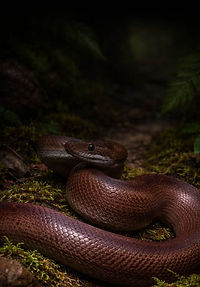
The family Boidae includes the constrictor snakes of Venezuela, ranging from medium-sized species to the largest snakes in the country. They are non-venomous snakes that hunt by constriction, a mechanism in which pressure applied to the prey causes circulatory collapse and ischemia, rather than suffocation as is commonly believed.
Boids inhabit a wide variety of ecosystems, including humid forests, savannas, riparian zones, and semi-aquatic environments. They show notable diversity in habits, with terrestrial, arboreal, and aquatic species.
Ecologically, Boidae play a fundamental role as regulators of vertebrate populations, especially rodents. Despite their size and imposing appearance, they rarely pose a danger to humans. Persecution and illegal trafficking are the main threats they face, driven by fear and misinformation.